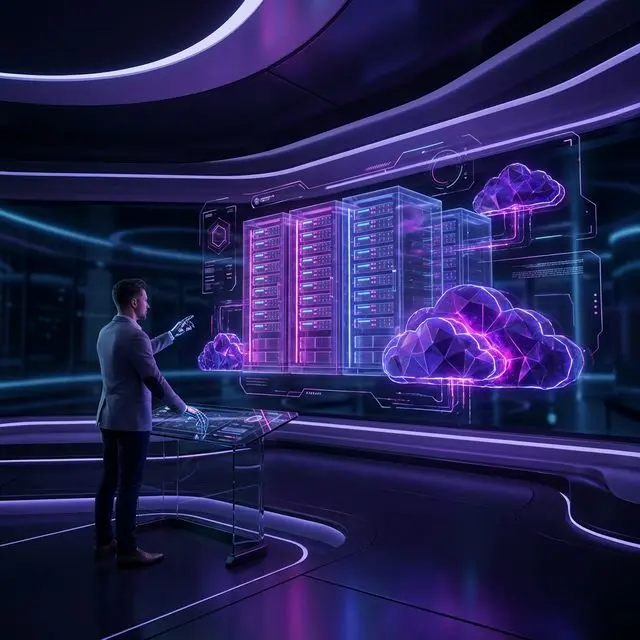
Unoptimized AWS Spend and Fractured Cloud Architecture
AWS offers unparalleled power, but spinning up infrastructure organically often leads to massive architectural anti-patterns, horrifying monthly compute bills, and glaring security vulnerabilities nested deep within your IAM permissions.
Premier AWS Architecture and Cost Optimization
We conduct deep architectural audits and reconstruct your AWS environments. From designing serverless Lambda architectures to establishing multi-region VPC topologies and locking down IAM infrastructure, we build AWS foundations perfectly balanced for extreme performance and cost efficiency.
Why NeoEvolution?
Radical Cost Reduction
Identifying orphaned resources and optimizing compute matching to slash monthly AWS spend by up to 40%.
Serverless Transformation
Rearchitecting monolithic VMs into highly-available, scale-to-zero serverless environments using Lambda and API Gateway.
Military-Grade Security
Auditing and enforcing strict Least Privilege access protocols across your entire organizational infrastructure.
Recent Deliveries
Overview
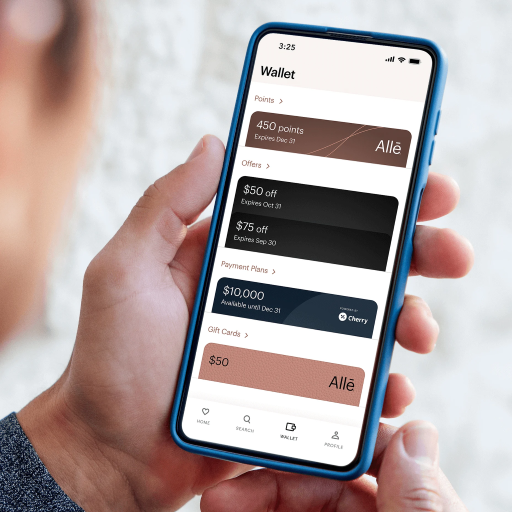
As the largest aesthetics company in the U.S., Allergan Aesthetics set out to redefine customer loyalty through a digital-first approach. The mission was ambitious: to launch a comprehensive platform that not only rewarded aesthetic treatment customers but also served as a business tool for thousands of providers and internal stakeholders.
Project Objectives
• Serve millions of patients with seamless loyalty experiences
• Enable 24/7 access to rewards, gift cards, and promotions
• Integrate real-time provider search, secure payments, and administrative tools
• Support marketing, customer support, call centers, and sales operations
Key Deliverables
NeoEvolution AI collaborated closely to deliver Allē providing staff augmentation to design and develop an intuitive ecosystem that redefined loyalty in the aesthetics space.
• $5.2B+ in annual sales and $1.6B+ net revenue
• 7.8M+ patient users, 75K+ care providers nationwide
• 3 fully-integrated systems: Consumer, Business and Admin
• Major adoption across call centers, marketing, sales, and support
• Secure, compliant infrastructure deployed at scale
• Streamlined promotions and provider visibility, increasing customer retention

React
Chakra UI
NodeJS
Typescript
Storybook

Jest
Cypress
AWS

PostgreSQL
Serverless
GraphQL
Rest
Kubernetes
Terraform
Docker
Datadog
Okta

PingID
AWS Architecture Consulting — FAQ
Real questions from engineering leaders evaluating our team.
Five usual culprits: idle/stopped EBS volumes still billing, NAT Gateway egress (especially with cross-AZ traffic), oversized RDS instances, S3 storage class misalignment (Standard for cold data), and unattached Elastic IPs. A 1-week cost audit typically finds 20–40% in low-risk savings without touching architecture.
Workload-by-workload. Lambda + API Gateway is a fit for spiky, low-throughput, stateless work — and a poor fit for sustained traffic, long-running tasks, or anything cold-start-sensitive. ECS Fargate is the boring middle option that wins more often than people think. We avoid prescribing one answer; we measure and decide.
Terraform for most engagements (best ecosystem, mature). CDK if your team is heavily TypeScript and wants to stay in code rather than HCL. CloudFormation only when something else doesn't support a service yet. We write modules with explicit inputs/outputs and pin provider versions — no untyped vars, no implicit defaults.
AWS Organizations + AWS Control Tower as the baseline. Separate accounts for prod/staging/dev/sandbox/security at minimum. Cross-account access via IAM Identity Center (formerly SSO) with permission sets, not long-lived users. We refuse to share root credentials and won't create them.
Yes — we've shipped under all three. Standard controls: AWS Config rules for compliance drift detection, GuardDuty for threat detection, KMS-encrypted everything, dedicated logging account with immutable storage, runbooks for incident response. We'll work alongside your auditors and the GRC team owns the final attestation.
Pragmatically — pure cloud-agnostic abstractions are expensive and rarely pay off. We use AWS-native services where they're best (Lambda, S3, DynamoDB) but keep critical business logic portable: containers over Lambda when portability matters, standard SQL over Aurora-specific extensions, etc. The honest answer is some lock-in is fine; document it explicitly so the trade-off is conscious.
Explore related services
Kubernetes & Cloud Native
Discover Kubernetes & Cloud Native services →Cloud & InfrastructureDevOps & Docker
Discover DevOps & Docker services →Data & ArchitectureSearch & Observability
Discover Search & Observability services →Data & ArchitectureEvent-Driven Infrastructure
Discover Event-Driven Infrastructure services →
NeoEvolution AI: Where elite engineering meets exponential technology. We don't just predict the future; we build the infrastructure that runs it.
Company
Headquarters
Suite 200
2020 Winston Park Drive,
Oakville, ON L6H 6X7
Canada
Connect
hello@neoevolution.ai
© 2026 NeoEvolution AI