
Generic API Calls Aren't Enough for a Competitive Moat
Simply wrapping a ChatGPT API query doesn't create a defensible product. If your AI features hallucinate constantly, lack access to your specific proprietary data, and have expensive, unbound latency, your customers will quickly abandon the feature.
Bespoke Generative AI Architecture & LLM Fine-Tuning
NeoEvolution AI specializes in embedding deeply contextual Generative AI into enterprise software. We consult on building secure Retrieval-Augmented Generation (RAG) loops, fine-tuning open-source models (like Llama), and establishing guardrails to guarantee factual, secure AI outputs.
Why NeoEvolution?
Proprietary RAG Architecture
Vectorizing your secure corporate knowledge so LLMs can reason over your private documents without leaking data.
Model Fine-Tuning
Adjusting weights of open-source models to match your highly specific industry jargon and use cases.
Output Guardrails
Implementing semantic router constraints to guarantee the AI cannot be hijacked or biased by user input.
Recent Deliveries
Overview
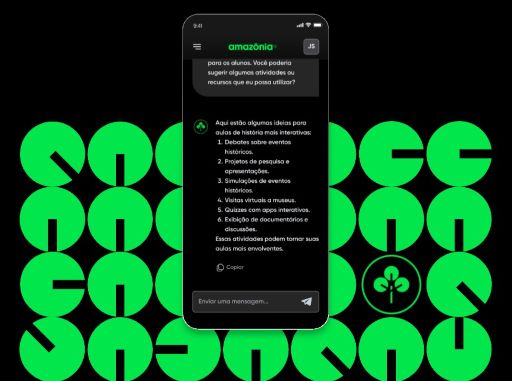
WideLabs specializes in generative AI, computer vision, predictive algorithms, and geoprocessing. Notably, WideLabs developed “Amazônia IA,” a large language model (LLM) trained on Oracle Cloud Infrastructure, designed to address Brazilian linguistic and cultural contexts.
Project Objectives
• Build Brazil's largest LLM trained with local language
• Run LATAM's largest language model on a secure infrastructure
• Build a GenAI versatile platform
Key Deliverables
NeoEvolution AI collaborated closely with WideLabs to create Amazônia AI providing staff augmentation to design and develop a versatile LLM platform with owned and internally trained data.
• WideLabs Trains One of the Largest Brazilian AI Models on Oracle Cloud Infrastructure
• Oracle and Nvidia strengthen their partnership with a zettascale cloud cluster
Terraform

Oracle Cloud
AWS

Golang
Python
LangChain
Kubernetes
ArgoCD

Typescript
LLM & Generative AI Consulting — FAQ
Real questions from engineering leaders evaluating our team.
Default to RAG. Fine-tuning is for style/format adaptation; RAG is for factual grounding in your data. Most enterprise use cases — internal search, customer support, document Q&A — are RAG. Fine-tune only when you've validated RAG and still need behavior the base model can't deliver.
Depends on cost, latency, data residency, and quality. We start with Anthropic Claude or GPT-class models for prototyping (fastest path to validate the use case), then evaluate switching to open-source (Llama, Qwen) only when we have evidence the cost or compliance pressure justifies it. Self-hosting open models is genuinely expensive — don't pick it for ideology.
Several layers: chunking strategy tuned to your data shape (not generic 512-token windows), hybrid retrieval (BM25 + vector) over pure semantic, re-rankers for top-N, citation requirements in the prompt, and a deterministic eval harness that runs on every change. Hallucination rate is a measured metric, not a vibe.
Input filtering, structured output (function calling / JSON mode rather than free text), separation between trusted and untrusted text in the prompt template, output validation, and a clear privilege model (the LLM never has direct access to write APIs — always through validated tool calls). We assume injection attempts will happen and design for them.
Use enterprise tiers (Anthropic, OpenAI Enterprise, Azure OpenAI) with data-not-trained guarantees. For genuinely sensitive data, deploy a self-hosted open model in your VPC. We've shipped both patterns. The decision is usually compliance- or contract-driven, not technical.
First production feature in 6–12 weeks for a focused use case. Realistic ROI window: 3–6 months for adoption + measurable impact. Anyone promising shorter is either selling magic or not measuring rigorously. We push back hard on demos that ignore the operations cost of running LLMs in production.
Explore related services
AI Automation
Discover AI Automation services →Platform DevelopmentEnterprise AI
Discover Enterprise AI services →Data & ArchitectureGraph Databases & Data Eng
Discover Graph Databases & Data Eng services →AI & AutomationSenior AI/LLM Engineer
Discover Senior AI/LLM Engineer services →
NeoEvolution AI: Where elite engineering meets exponential technology. We don't just predict the future; we build the infrastructure that runs it.
Company
Headquarters
Suite 200
2020 Winston Park Drive,
Oakville, ON L6H 6X7
Canada
Connect
hello@neoevolution.ai
© 2026 NeoEvolution AI